
On Connection
What does connection mean to you? How does connection feel?

Hello! 𓍊𓋼
i hope this digital letter finds you in ease. i am so grateful you are here and that you interact with this space. i have been reflecting a lot lately on connection and i wanted to explore how i navigate connection, what connection means to me, obstacles i experience and other branching thoughts in this digital space.
Contents:
🍄 Personal Reflections on Connection
🍄 What helps me connect?
🍄 Connection Questions: Prompts for Introspection
🍄 Foundations of Connection and Self-Defining
🍄 Spacious Love: Reframing Disconnection
🍄 Resources: Attachment Assessment, Self-Compassion Assessment & Personal Finance Organizer
Personal Reflections on Connection
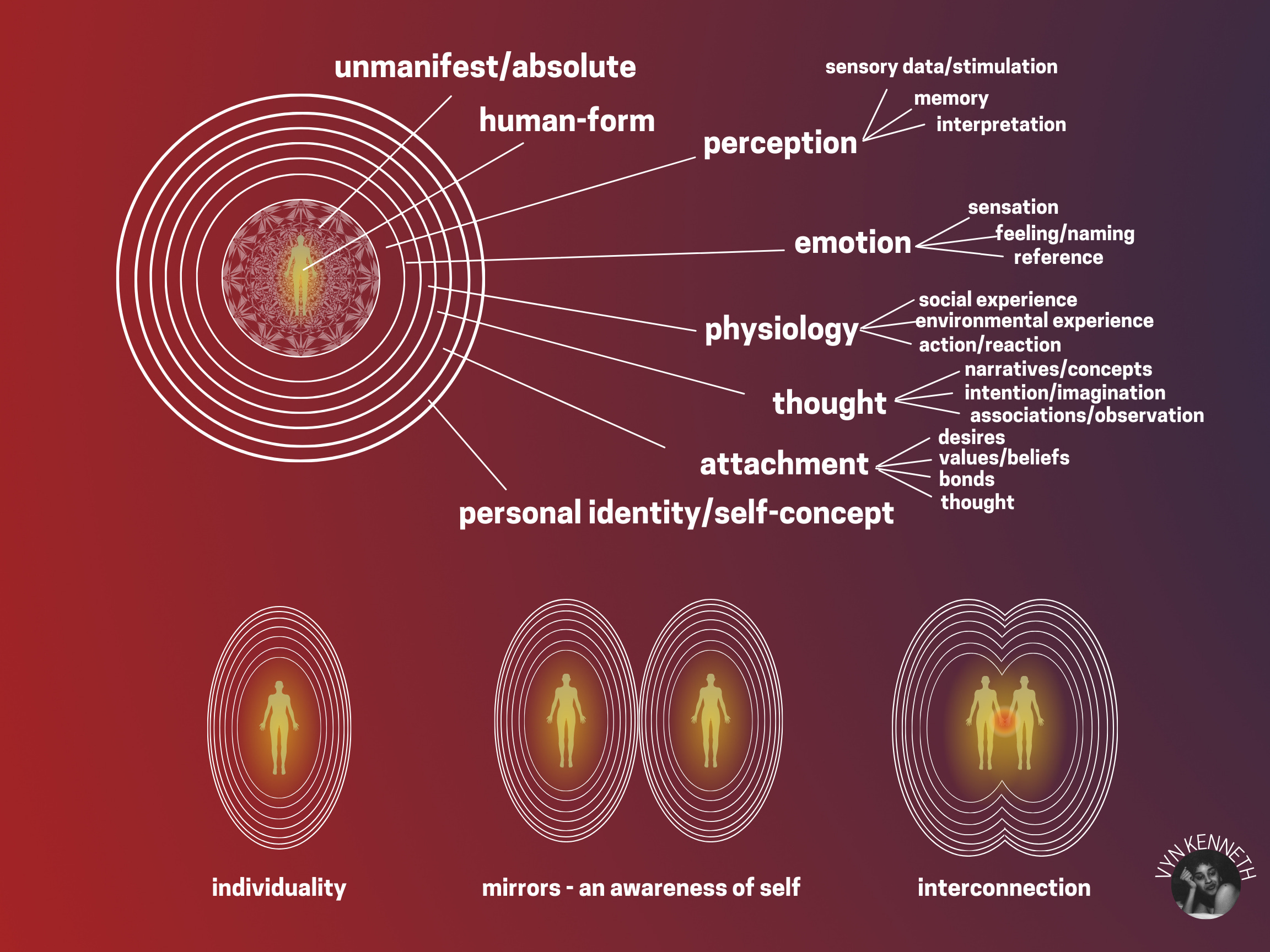
Connecting with and showing up for others is an area where i feel i could use some practice. i can feel so grounded in myself when i am alone but the moment the perceptions, experiences, expectations and beliefs of another are introduced i often feel there can be shaky ground and non-presence in my inner world. Mainly, this depends on the rigidity and expectations of the connection, do we have an expectation to conform to each other’s inner worlds or are we exploring how our inner worlds relate, to create a new world that is this unique connection?
i feel we are all connected and the layers that make up our experience bring about complex variations that sometimes, for me, can be difficult to navigate especially when i am not aware of how i relate to and identify with these variations in my own experience. i also notice the learned practices of shame and/or punishment (not to be confused with the consequences/effects of harm, where someone may not feel safe to be closely connected) in our interpersonal relationships. This is to be expected in a highly oppressive culture and system that invades our most intimate spaces, including our connections. i have both experienced and practiced this and it never feels good nor does it fulfill my relational needs or make room for authentic connection. As i learn to navigate and stumble along the path towards deep connection and presence with others, and ground myself through any social anxieties i may experience…I am visited by so much gratitude for the ways i am able to connect and love.
A moment of gratitude…i am so incredibly grateful to experience…
🌿 friendships with no expectations other than the basics: authenticity, honesty, safety, care, etc…capacities can fluctuate, so i am so grateful for spaciousness and awareness of this in connections
🌿 friendship that allows space for healthy conflict-resolution and taking about difficult or vulnerable subjects (this absolutely changed the game for me as someone whose deeply ingrained response is to run from and avoid interpersonal conflict at any cost, an opportunity to reconnect after conflict changed how i want to navigate accountability)
🌿 connection where we may relate and bond in one way, and may not relate in another, so we know on what plane we choose to connect and which we choose not to
Reminders:
There is no “right” method of connecting with another person and it is beautifully imperfect and exploratory work. How can we release expectations of perfection and free ourselves and our connections from rigidity without swaying on our base needs, while remaining grounded in love and care?
No connection will feel the same and no single connection can fulfill all of your needs. Our different relational needs can be fulfilled through various connections (including our connection to ourselves).
Acceptance. Acceptance. Acceptance. When we are rooted in complete acceptance of one another, it is easier to evolve and grow together at an intuitive pace, release ourselves and another from attempts of control/manipulation, and decisively and loving create space when the connection isn’t working, without making another an enemy.
Gratitude and Compassion. Though we intuitively gravitate towards and/or yearn for connection…It is an immense honor to connect with another, to explore their inner world and create shared worlds, a beautiful choice shared between people. May i never forget this. We are all figuring it out, and for many, connection can be difficult or even trigger a stress response (fight, flight, freeze, fawn). May i never forget this.
Persona dir. Ingmar Bergman (1966)
This movie was shared by a friend and this scene very much describes my learned fear of being seen/being a complete recluse fighting with my urge to connect and be an active participant in this world…not wanting to be a “person.”
What helps me connect?
Knowing thyself. Learning myself, with loving introspection and honesty has allowed me to approach connection in a new way and helps me to feel more grounded as I try to connect more deeply with another. How do i relate to, identify/do not identify with, and make sense of the layers of this human experience? What are my relational needs? What is my current method of attachment (or attachment style)? When I first explored attachment style, I used this psychology-based assessment as a tool. This was a huge starting point for me in learning my relational patterns to then consciously and intentionally choose how i would like to show up in connection with another.
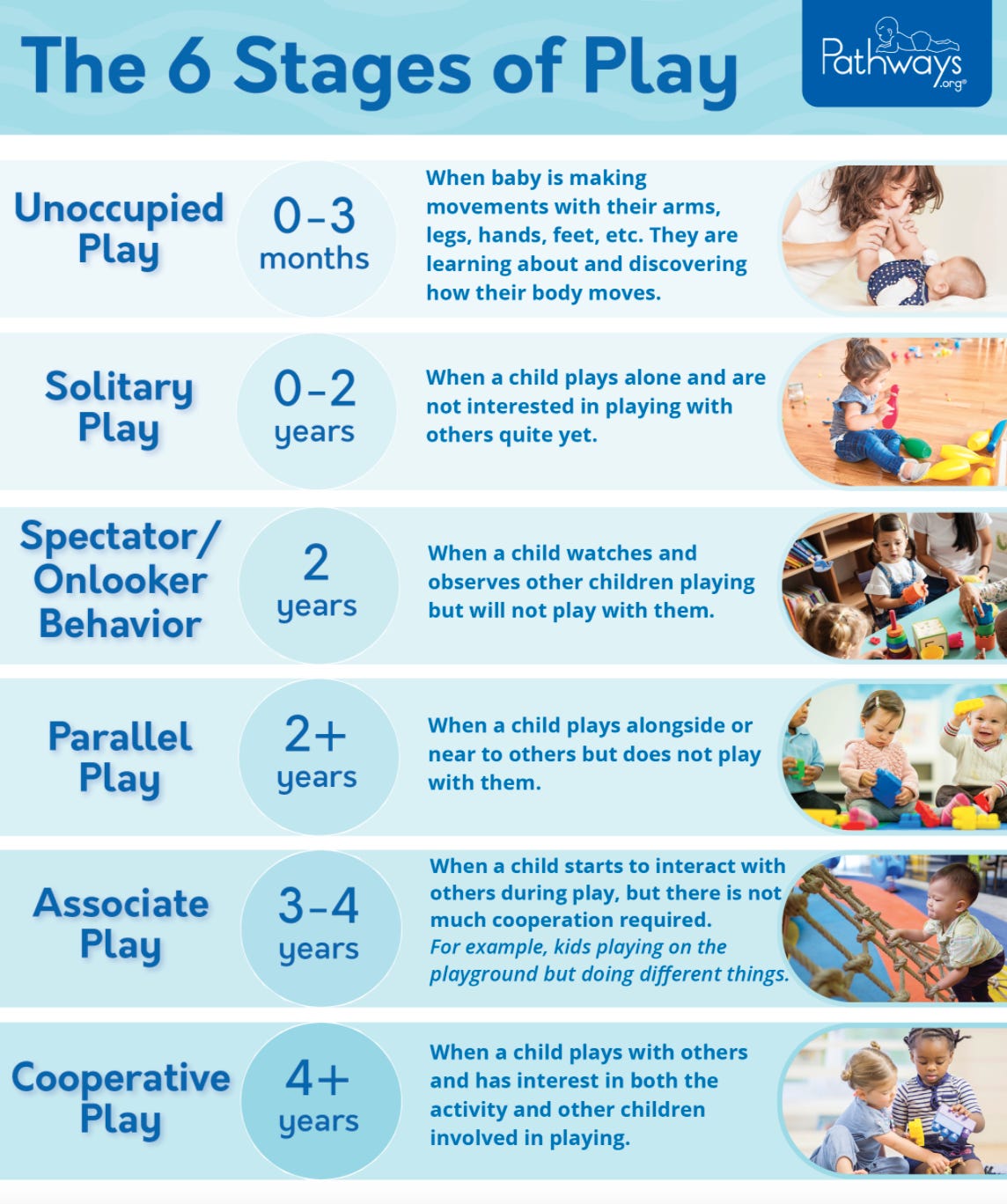
Going back to the basics. It has really helps me to identify how I enjoy connecting. To explore methods of connection i look to how connection is shared between children. How do children play? What is play in adulthood? In this process I have found that often i enjoy talking because i want to feel understood, not necessarily because I actually enjoy talking. I do enjoy talking during joint exploration, thought spirals and sharing perceptions on a particular subject of shared interest…but mostly, I am a fan of shared activities, shared space and shared silence, especially with books or outdoors. I also love people watching together or observing but I know socially that can seem a bit strange. What’s your play language?
Honesty. (For me, as someone with deeply embedded behaviors of hiding my true feelings/true self for self protection, honesty can sometimes feel brutal.) One of my biggest obstacles with connecting is not communicating my inner experience authentically or not knowing the language to express my experience. This has caused major rifts in my relationships and i am actively practicing this. My greatest fear i am overcoming with this is being met with defensiveness, shame, judgement or rejection in the midst of my complete honesty (which will sometimes happen and that’s ok) and practicing acceptance, self-affirming, self-love and care in these moments and compassion for those who meet me with defenses.
Acceptance. Who you are, as you are, is enough. I love you as you are and choose to grow alongside you as you shift and change. If we find our connection does not work for one or either of us, i accept that too.
Compassion. It is a strong desire of mine to place compassion at the forefront of every connection I experience and share. By this i do not mean passivity, especially during conflict, harm or abuse, but compassion to hold the complexities and seek understanding while prioritizing (physical, emotional, environmental, spiritual) safety first and foremost.
Connection Questions
There are so many nuances with connection I find it hard to place a definite guide or set of rules to what connection “should” be or look like. I find it easier to listen to and explore how my body feels in connection. I thought it may be helpful to check-in with myself and really explore what connection means to me, the sources of influences and the barriers and obstacles that lead to a feeling of disconnection.
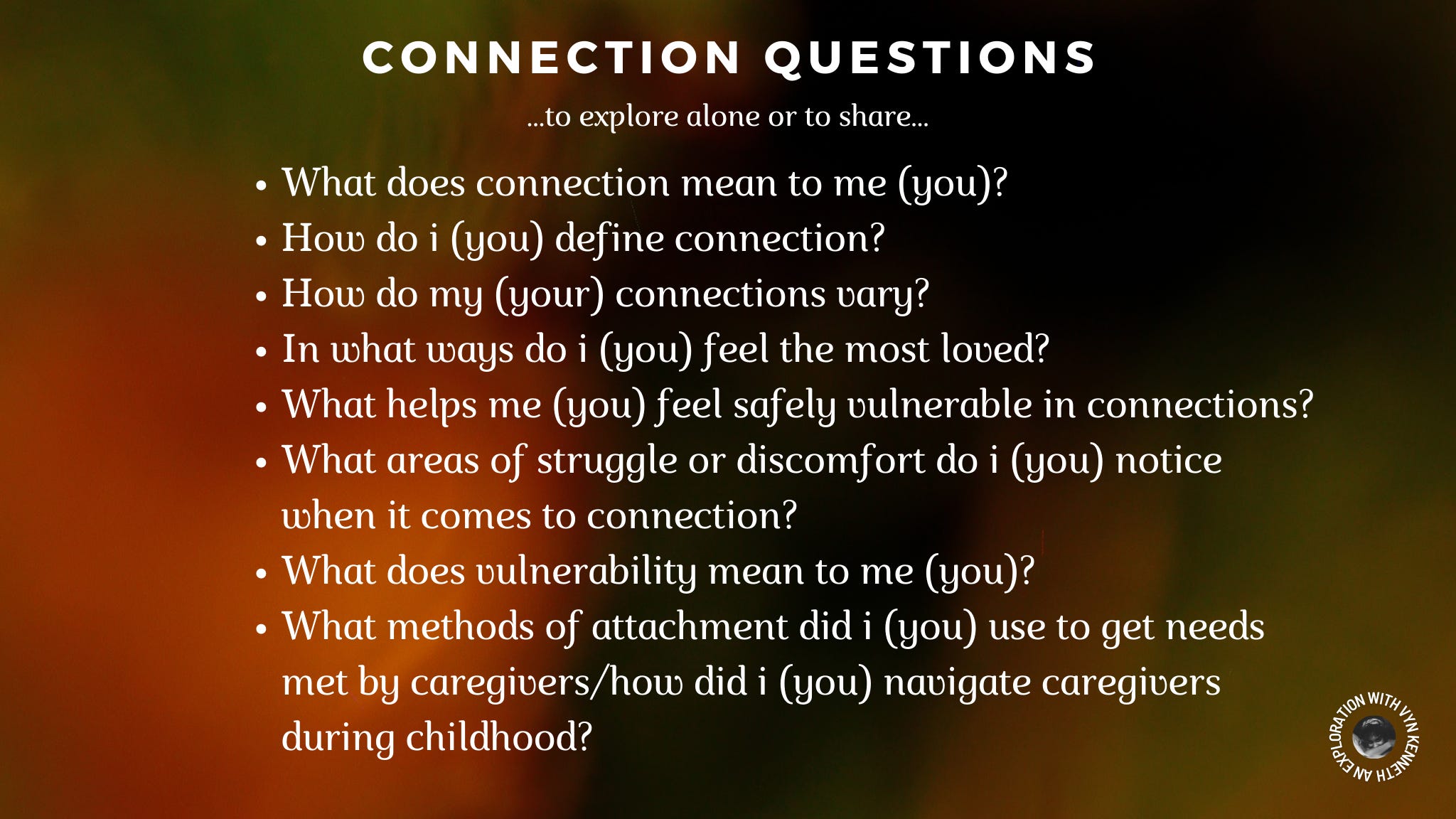
I have been journaling and creating lists of what I want to experience and share in connection since I was 16. This list has changed drastically over the years as I have experienced more connections, met myself and become witness to my behaviors more deeply. One thing i have learned in the making of these lists is that people are not checkboxes and the moment i expect them to be, I become rigid and closed off to explorative, authentic connection. I believe connection to be a unique dance that cannot be replicated. So long as the connection is rooted in safety and exploration (physical, emotional, intellectual, spiritual), the connection will follow its natural flow…with its own collaborative dynamic, duration, phases, shifts, beginning/end and boundaries. There seems to be many rules passed around (from various channels - media, social platforms, caregivers, friends, etc.) on what connection “should” look like, many of which are assigned by conditioned categories of gender and culture…all influenced by how we attached and learned to connect in childhood…often bringing expectations and practices of shame, judgement and attempts to control to our connections with one another. We collect these references and experiences and form our own subjective definitions and preferences. It’s strange…that we place our connections in fixed, rigid containers as if we are not constantly in motion together. It’s strange that we can easily create battles of me vs. another in the midst of conflict or vilify each other in the midst of incompatibilities. This may be another form of resistance to the complete acceptance of another and from there, determining how we want to relate and show up. This is not to say people do not change…change is constant and we are constantly provided with opportunities to evolve and expand at our own pace. Connecting is simple and complex at once, we have so many layers and dimensions and our lived experiences bring such interesting angles and perspectives that are bound to be different and can easily result in incompatibilities. How do we make space for the subjective in our connections?
Disclaimer: Here, I am not speaking of the living legacy of colonialism and the denial of its depth and existence as an incompatibility, although the way we. have learned to navigate these conditions may be incompatible in our relationships to each other. The parasite of capitalist imperialism is injected into us very early and can be integrated as personality traits or preferences when they are really just the conditions we have been manipulated by. I believe the culture we exist in ties heavily into how we learn to relate to one another. There must be space to explore this.How can we divest from absolutes in our connections? Connections are not a monolith and maybe approaching it one way, with rigidity, will not open us up to the possibilities and uncertainty but chosen commitment that follows relationships. What works for me in one connection may not work for me in another, and that is ok and to be expected. Without deciding my connection lacks something or comparing it to another, how can I enjoy and share the form this connection takes, allowing the connection to breathe, deepen and expand in flow with its intuitive pace if i so choose to maintain it?
Foundations of Connection & Self-Defining
Instead of holding people to an expectation, an ideal or a checklist, I can be grounded in acceptance and approach connection by how I experience and share love both towards myself and in my relationships with another.
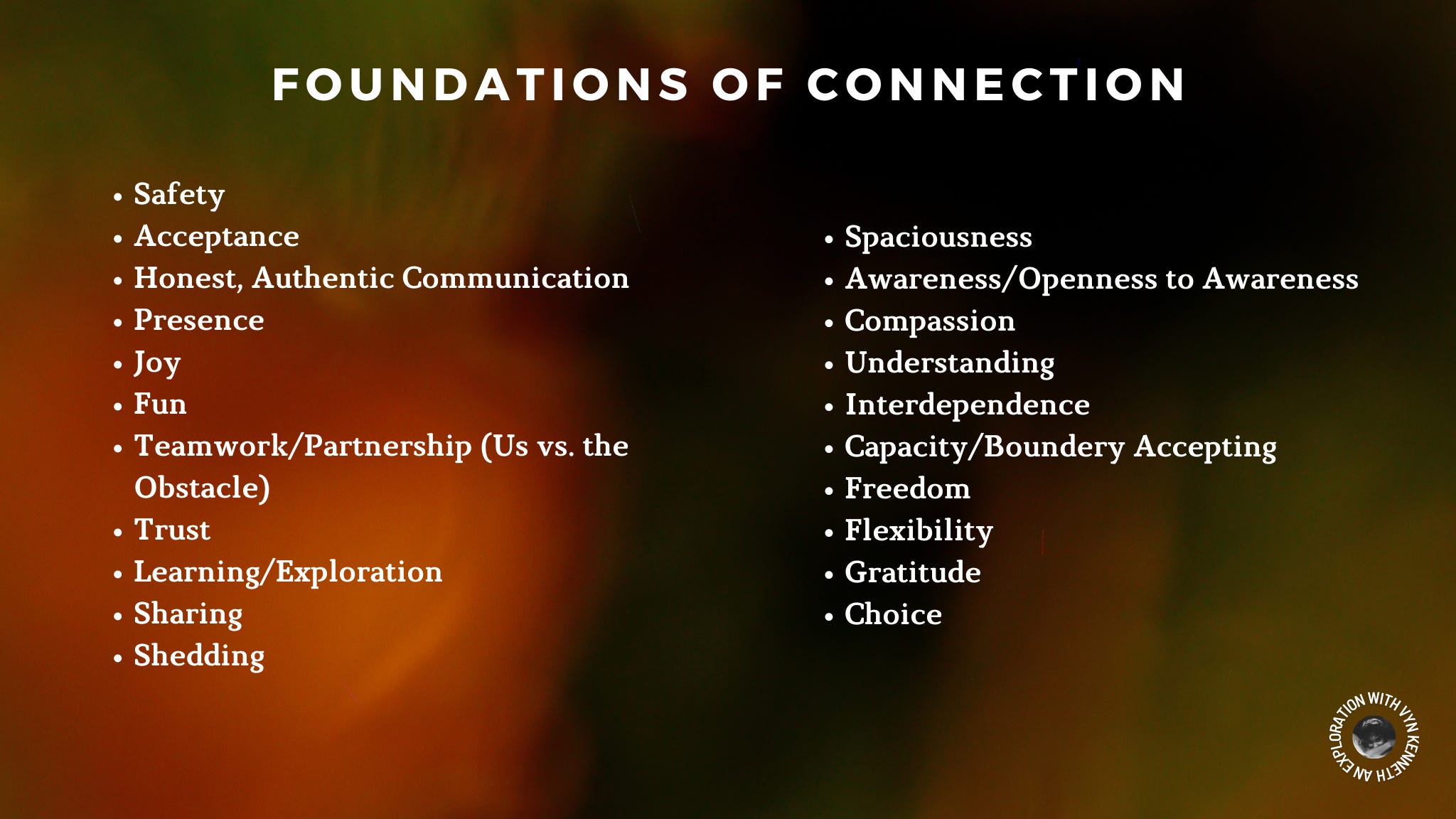
In a time where words mean less and less, staying grounded in my own definitions of subjective experiences can help ground me in my inner world and authentic truth. This is why i really have to know my why and my how when it comes to my approach to being human.
Spacious Love: Reframing Disconnection
In my experience, the shifting of a connection can be very difficult…it can sometimes be easy to attach or hold on to a specific form a connection takes. What if disconnection was reframed as spacious love? i love myself so i must take space. i love you so i must take space. If the best way for me to love you is from a distance, or you, i…is this disconnection? or is this a change in the form the connection takes? What if space and adhering to the boundaries of oneself and another is the best way we connect and share love, even if that means the love is shared through no longer being an active part of each other’s lives?
i have reflected on this in response to my experience with familial estrangement, which is a legacy in my family. Experiencing falling outs in friendship as well, i wanted to reframe what disconnection meant to me as an attempt not to demonize oneself or another when a connection no longer is working or becomes harmful or unhealthy. i do not enjoy the feeling of me versus another or assigning labels of morality on myself or anyone else such as “right,” “wrong,” “bad,” or “good.” Grief still occurs with the changing of a connection, there is space for this. i spend a lot of time in my journal and tending to myself and my body when this grief arises within my experience. What is your process for grieving a connection?
This reframing has also deepened my trust in others to do what they feel is best for themselves, including the choice to change the dynamic of the connection we share by taking space. i then am slower to vilify someone for their decision to take space from me, and can sit with demonizing thoughts that may arise without creating a me vs. them narrative. i only ask there is decisiveness in the decision because the push-pull dynamic in connection does not work for me. This is also why this choice cannot be made from a space of manipulation or control, and must be made from listening to oneself and one’s needs.
i feel that is enough for now. i’ve journaled on this topic quite a bit and i felt so inclined to share and throw this into the digital ether.
Thank you for exploring with me!
Much Love,
Vyn
Resource Library:
Books
All About Love, bell hooks (Socially-Informed and Trauma-Informed Approach to Love)
The Road Less Traveled, M. Scott Peck (Self-Love/Connection/Attachment)
Attached: The New Science of Adult Attachment and How It Can Help You Find - and Keep - Love, Amir Levine (Self-Discovery and Connection)
Assessments
Attachment Style Assessment: Both option A and option B are helpful and this assessment allows you to create an account and retake it every few months to check-in with yourself and your progress or identify if any new triggers or struggles arise.
Self-Compassion Assessment: This assessment also includes guided self-compassion meditations and exercises that are really helpful with treating yourself (and others) with compassion.
Systems of Care
I have been implementing more reliable systems of care for myself and this has included making a personal finance sheet to organize my income, investments, savings and expenses. I was nervous to approach this but it has actually proven really helpful and has decreased a lot of stress and reliance on undocumented memories. I have linked this resource here.